Calembour
Spell words, build your deck
Poker hands as the cards fall
One shuffled deck, one board of cards. Pick five to score a poker hand, let the rest fall into place, and clear the board before the deck runs dry.
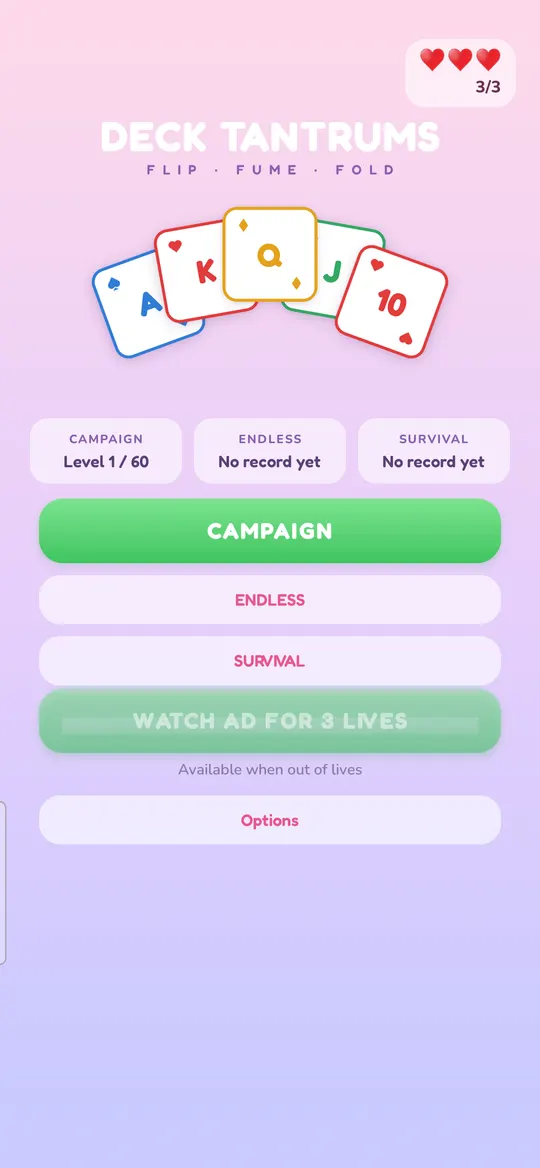
Free to play, supported by ads. Deck Tantrums privacy policy · Terms of Use
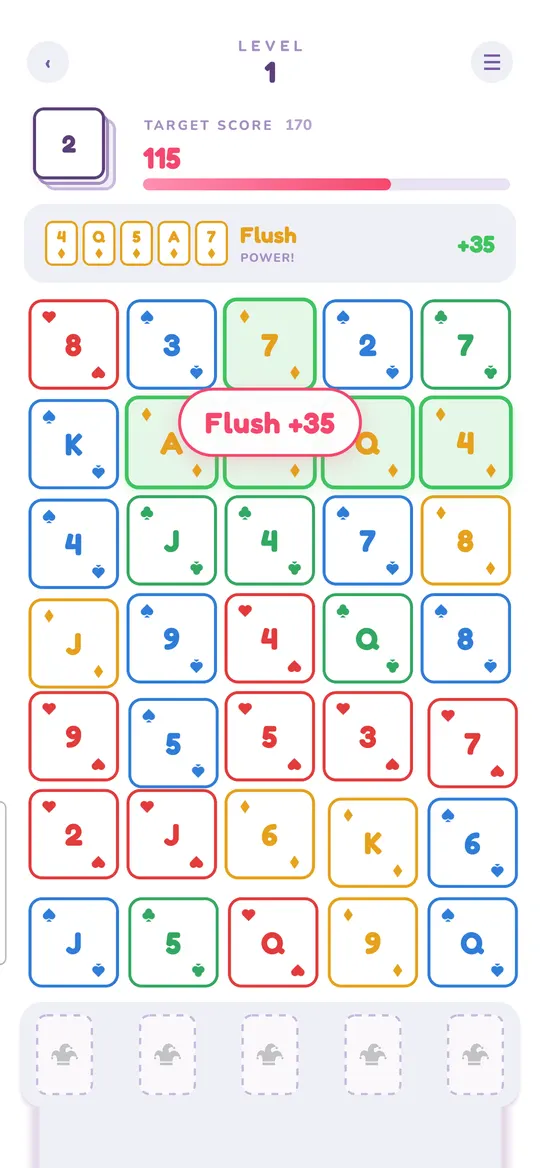
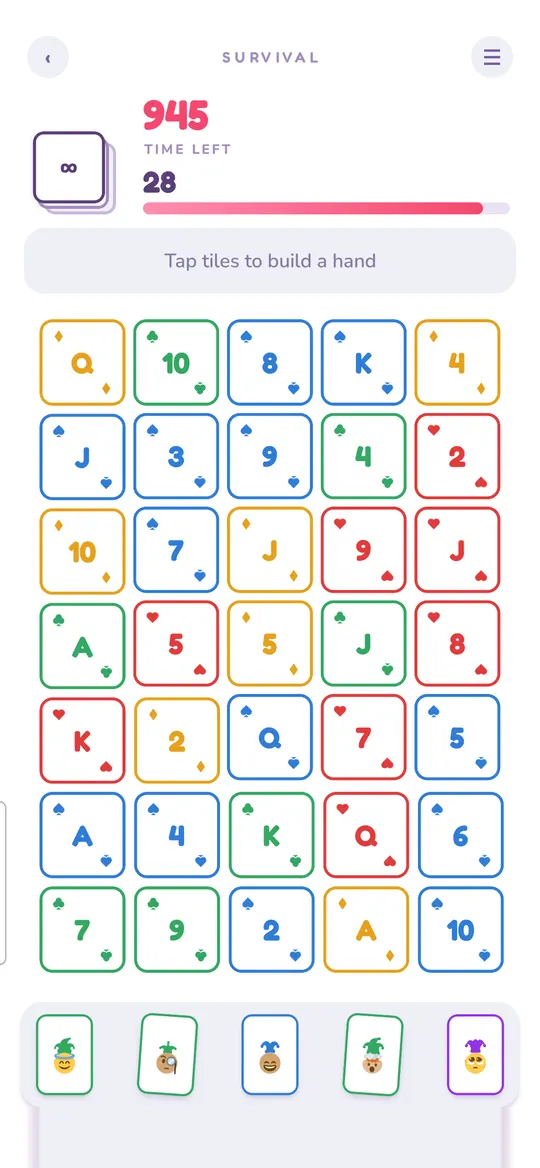
Deck Tantrums deals a single shuffled 52-card deck onto a 5-by-7 board. To score, link five touching cards, sideways, up, down or diagonally, by dragging across them or tapping them one by one. When you let go with five cards linked, they score as a poker hand and leave the board. The cards above fall into the gaps and new cards drop in from the deck.
Every level has a score target. Here's the catch: the deck never reshuffles. Every hand you play uses up five cards for good, so a full deck is only ten hands. You have to reach the target before it runs dry, and any cards still left in the draw pile when you win are paid out as bonus points.
Any five linked cards score something. If nothing better fits, they count as High Card. The ranking is the one poker players know:
| Hand | Points |
|---|---|
| High Card | 5 |
| Pair | 10 |
| Two Pair | 20 |
| Three of a Kind | 30 |
| Straight | 30 |
| Flush | 35 |
| Full House | 40 |
| Four of a Kind | 60 |
| Straight Flush / Royal Flush | 100 |
These are base values. The jokers you collect change them, sometimes a lot.
Clearing a Campaign or Endless level pays cash, which you spend in the shop on jokers: cards that bend the scoring rules and stay with you between levels. You have five slots. Buying a joker you already own stacks it, so it fires again for every copy. Each copy costs more than the last, and you can sell one back for half price.
Card puzzles can feel like luck when the deck keeps refilling and nothing you spend matters. In Deck Tantrums discards are permanent, so every hand is a choice between scoring now and keeping a better hand alive. The board still falls like a colourful tile-matching puzzler, so a single hand can set up the next three.
Hands also have to be connected on the board. Picking any five cards would turn the game into sorting; tracing a path makes you read the board's shape.
Deck Tantrums · 12 min read
Deck Tantrums jokers: all 50, and how to combine them
Fifty jokers, each bending the scoring rules a different way. What every one does, what it costs, which ones work together, and why the best picks change between Campaign, Endless and Survival.
Deck Tantrums · 11 min read
Poker hands, ranked and scored in Deck Tantrums
What each poker hand is, what it pays in Deck Tantrums, how often the board actually offers it, and how to spend a deck that never comes back.